In today’s industrial environment, the choice of raw materials directly affects facility reliability, maintenance costs and worker safety. Continuous exposure to chemicals, moisture, salts and wastewater poses significant challenges for metal-based systems.
One of the most advanced solutions to these challenges is fiberglass (FRP – Fiber Reinforced Polymer), a composite material that combines glass fibers with polymer resins.
Why Choose Fiberglass Over Steel?
Using fiberglass in industry offers several significant advantages:
- Corrosion resistance – suitable for work environments exposed to chemicals, wastewater and saltwater.
- High strength-to-weight ratio – a relatively low dead weight makes transport and installation easier.
- Reduced maintenance costs – no need for periodic painting to prevent rust.
- Electrical insulation – an advantage in applications that require low electrical conductivity.
- Long service life – provided the material is matched to the operating conditions and properly engineered.
- Design flexibility – custom manufacturing to the dimensions and requirements of each project.
Industrial Applications of Fiberglass
FRP products are used in a wide range of industrial facilities and systems:
- Storage tanks for chemicals and industrial liquids.
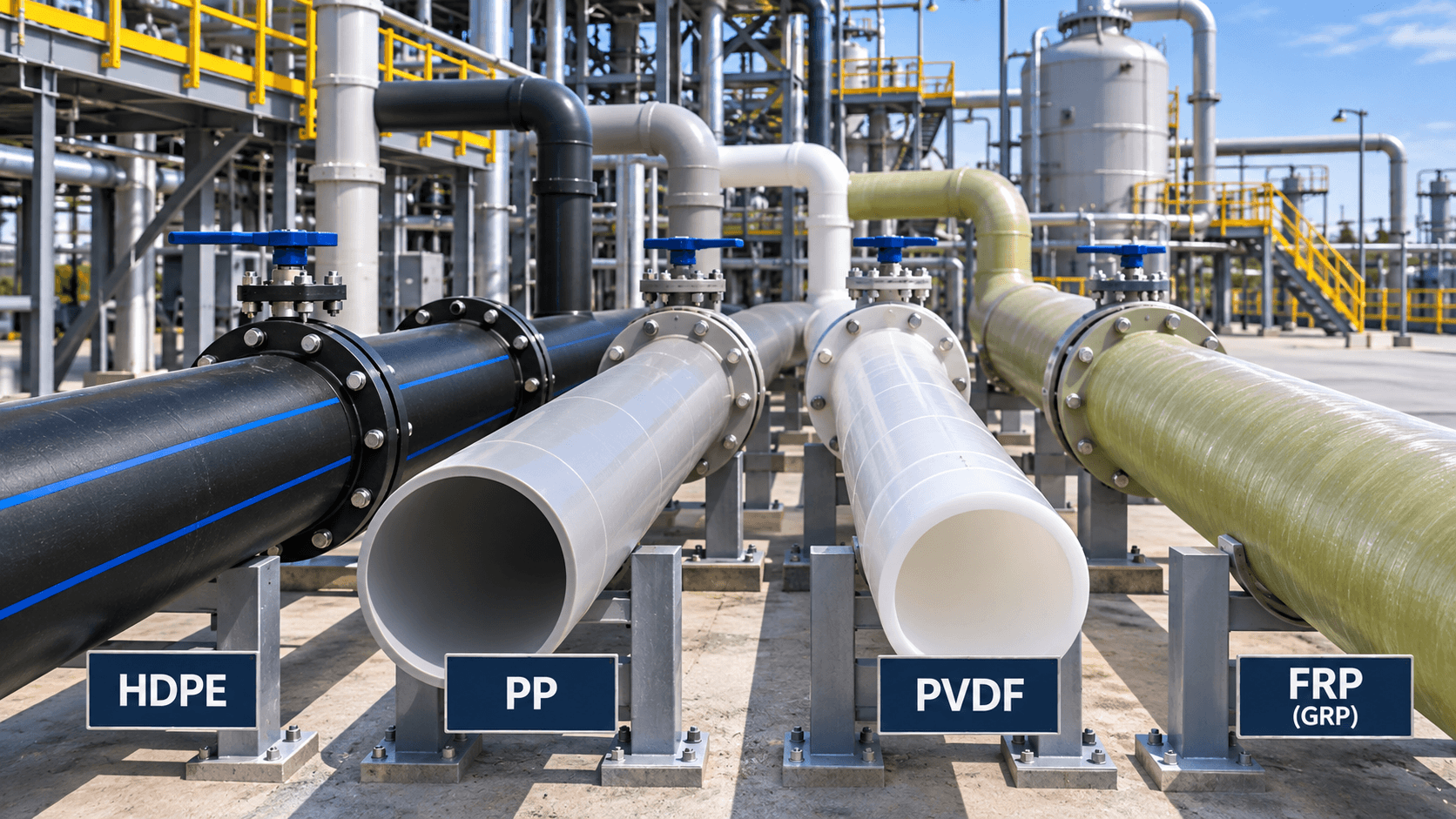
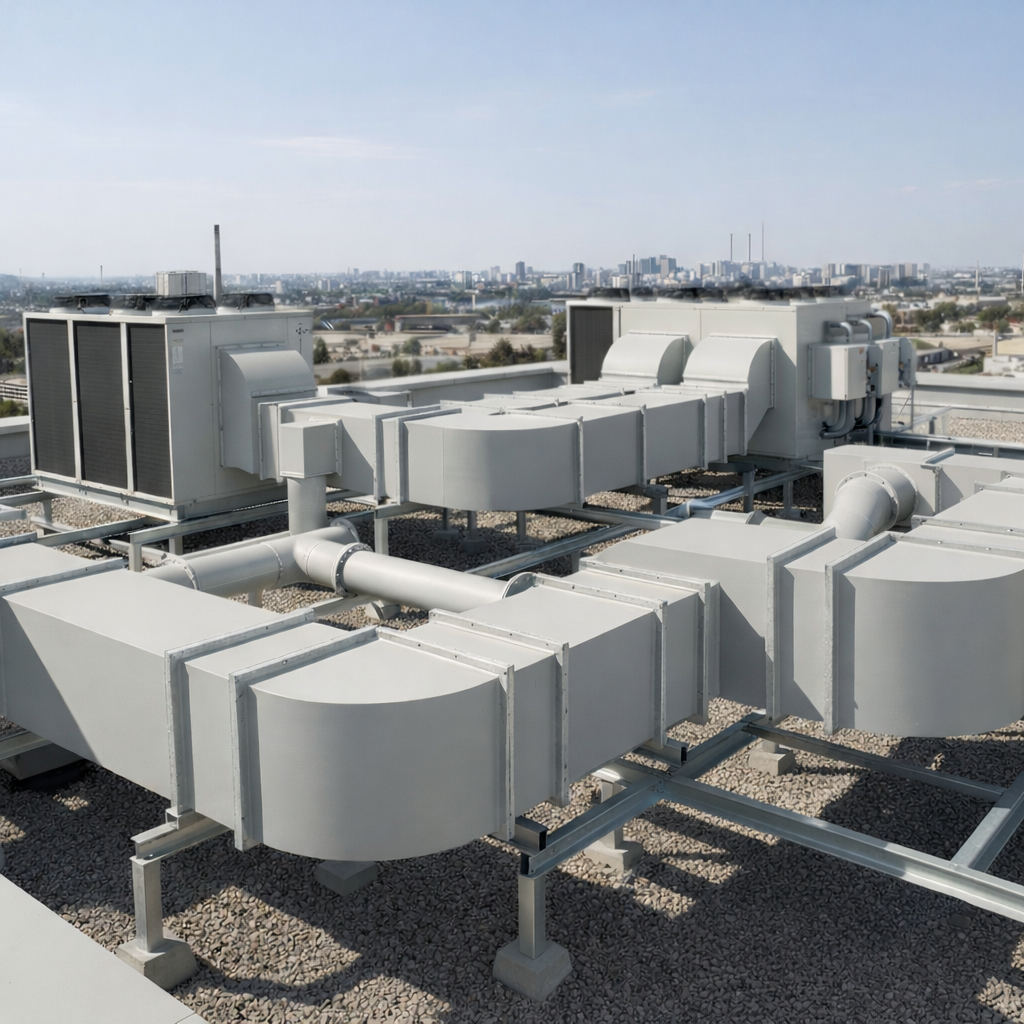
- Piping systems and ventilation ducts.
- Gas and emission treatment units (scrubbers).
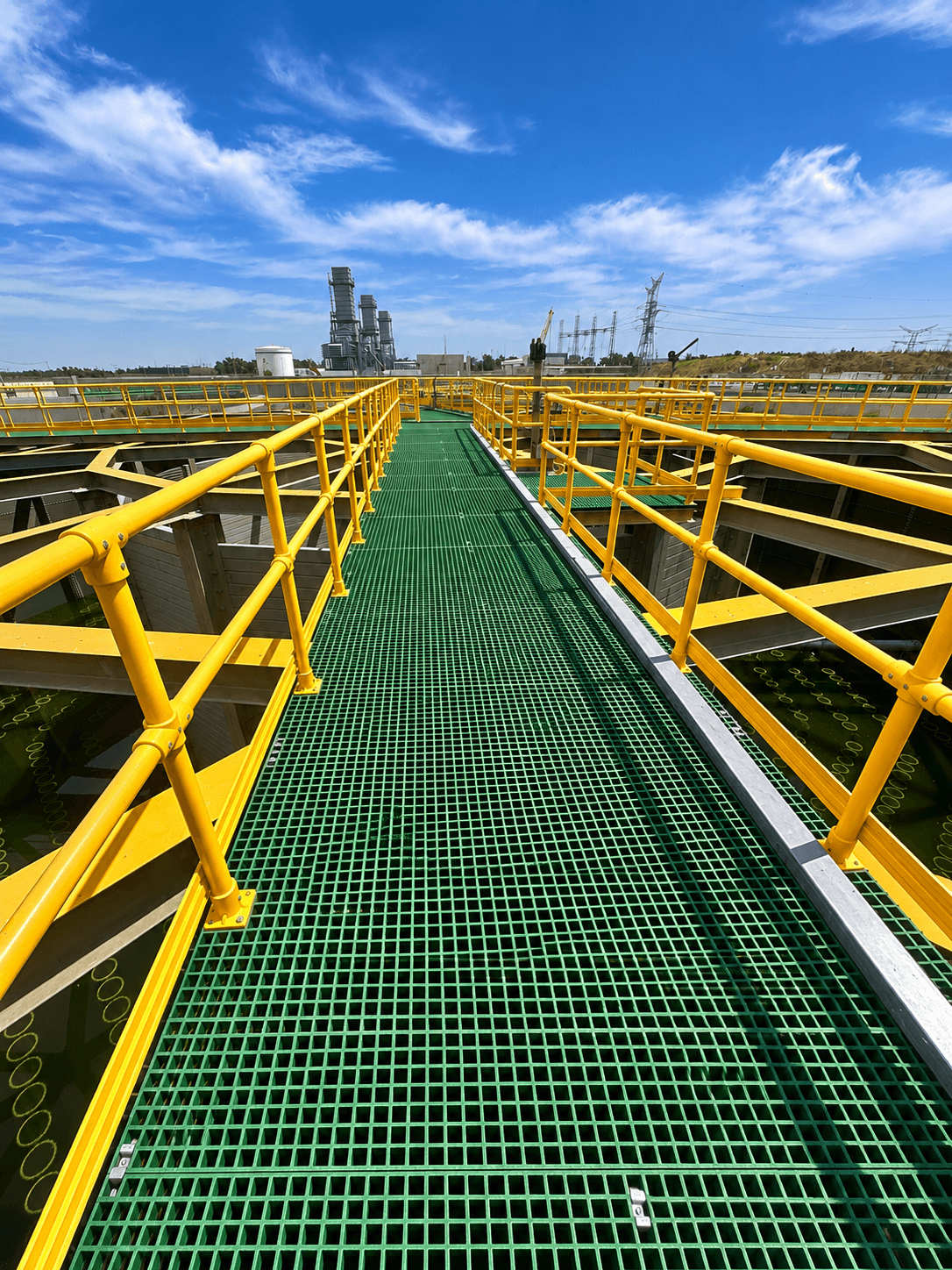
- Walkways and work platforms.
- Ladders, stairs and safety railings.
- Gratings and walking surfaces.
- Structures in wastewater treatment facilities.
These solutions are especially suited to chemical plants, desalination facilities, wastewater treatment plants, semiconductor fabs and water infrastructure.
Fiberglass and Life Cycle Cost (LCC)
When choosing a material for an industrial project, it is important to look beyond the initial purchase price to the cumulative costs over the facility’s years of operation.
Metal systems in corrosive environments may require maintenance treatments, painting, component replacement and facility shutdowns for repairs.
FRP systems designed for the specific environmental conditions can significantly reduce these costs and improve the plant’s operational continuity.
The Importance of Proper Engineering Design
Adapting fiberglass products to industrial use requires evaluating several parameters:
- The type and concentration of chemicals.
- Operating temperature.
- Mechanical loads and stiffness requirements.
- UV exposure.
- Safety and fire-resistance requirements.
- Selection of the resin type and composite lay-up.
Choosing the right raw materials and manufacturing method makes it possible to tailor the product to the operational and engineering requirements of each project.
A.A.H. Plast – Advanced Fiberglass Solutions for Industry
A.A.H. Plast Ltd. has specialized for more than four decades in the design, manufacture and installation of plastic and fiberglass products for industry.
The company provides custom engineering solutions, from the design stage through manufacturing and quality control to installation at the customer’s site.
A combination of engineering experience, advanced manufacturing technologies and ISO 9001 quality control allows us to deliver solutions for a wide range of complex industrial projects in Israel and worldwide.
Planning a project in a corrosive environment? Contact the A.A.H. Plast team for professional advice and an engineering solution tailored to your project’s needs.