Choosing a piping system for industry is an engineering decision with a significant impact on system reliability, process safety and operating costs over many years.
In recent years, the use of plastic piping and composite materials in industry has been steadily growing thanks to their corrosion resistance, mechanical properties and ability to handle a wide range of demanding operating conditions.
Each material has its own advantages and characteristics, so it is important to match the type of piping to the requirements of the project.
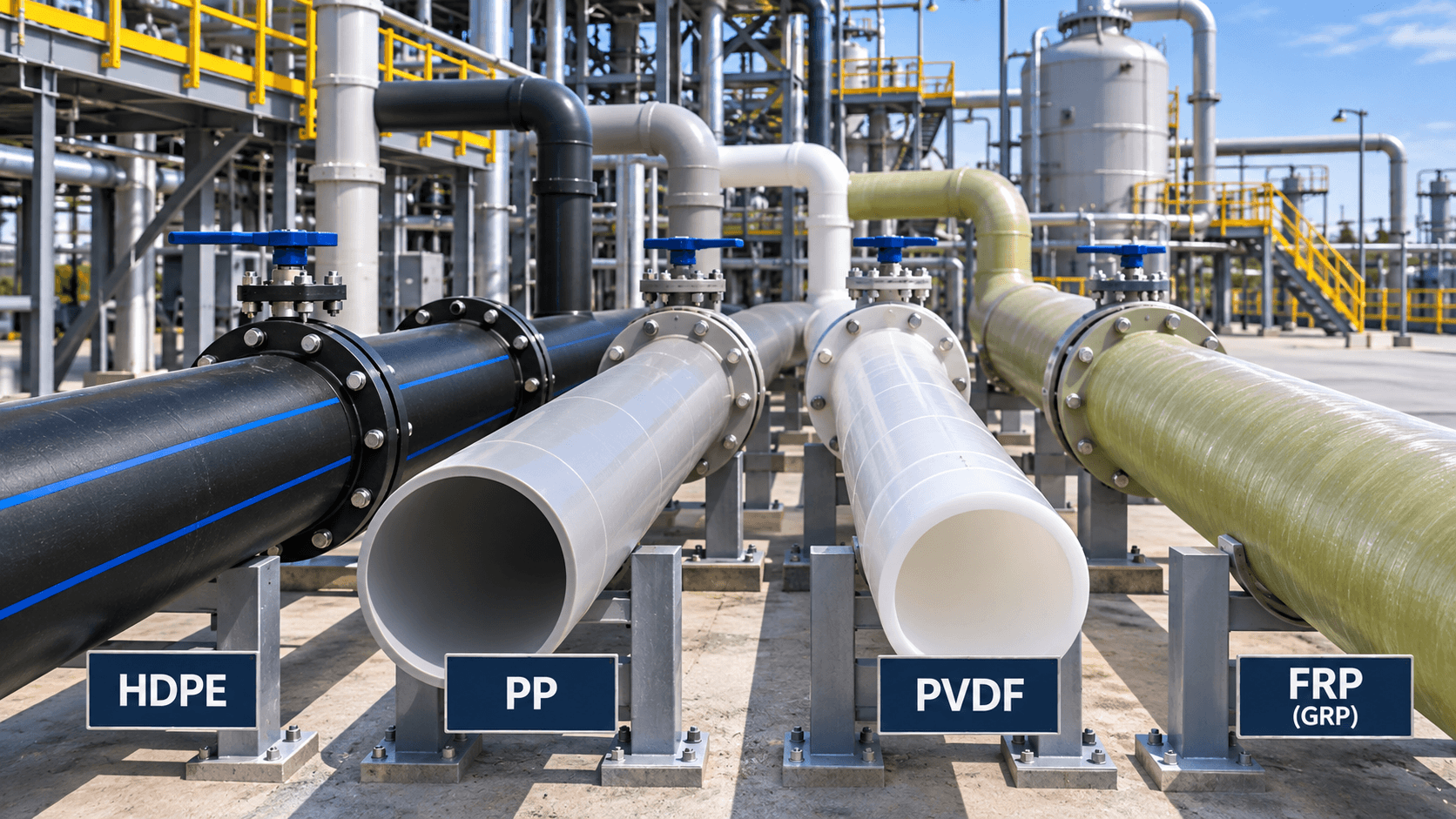
Polyethylene (HDPE) Piping
High-density polyethylene is one of the most widely used raw materials in piping systems and infrastructure.
Key advantages:
- High corrosion resistance.
- Flexibility and the ability to withstand ground movement.
- Good abrasion resistance.
- Can be joined by welding.
- Suitable for both underground and above-ground installation.
HDPE piping is used for water and wastewater conveyance, drainage systems, industrial infrastructure and fire-suppression systems, subject to the applicable standards.
Polypropylene (PP) Piping
Polypropylene is a thermoplastic material characterized by good chemical resistance and suitability for operating temperatures that are relatively higher than those of polyethylene.
Key advantages:
- Resistance to a wide range of acids and bases.
- Low dead weight.
- Suitable for industrial processes at elevated temperatures.
- Custom fittings and systems can be fabricated.
PP piping is common in chemical plants, industrial wastewater treatment systems, chemical transfer systems and production facilities.
PVDF Piping
PVDF is an advanced engineering polymer designed for industrial applications with especially demanding requirements.
Key advantages:
- High chemical resistance.
- Suitable for relatively high operating temperatures.
- Good UV resistance.
- Suitable for systems with high cleanliness and purity requirements.
PVDF piping is used, among other things, in the semiconductor industry, the pharmaceutical industry and systems conveying aggressive chemicals.
Fiberglass (FRP/GRP) Piping
Fiberglass piping is made from a combination of glass fibers and polymer resins, allowing the product’s properties to be tailored to the engineering requirements of the project.
Key advantages:
- High strength-to-weight ratio.
- Corrosion resistance.
- Can be manufactured in large diameters.
- Resin type can be matched to the chemical environment.
- Can be designed to meet pressure, stiffness and temperature requirements.
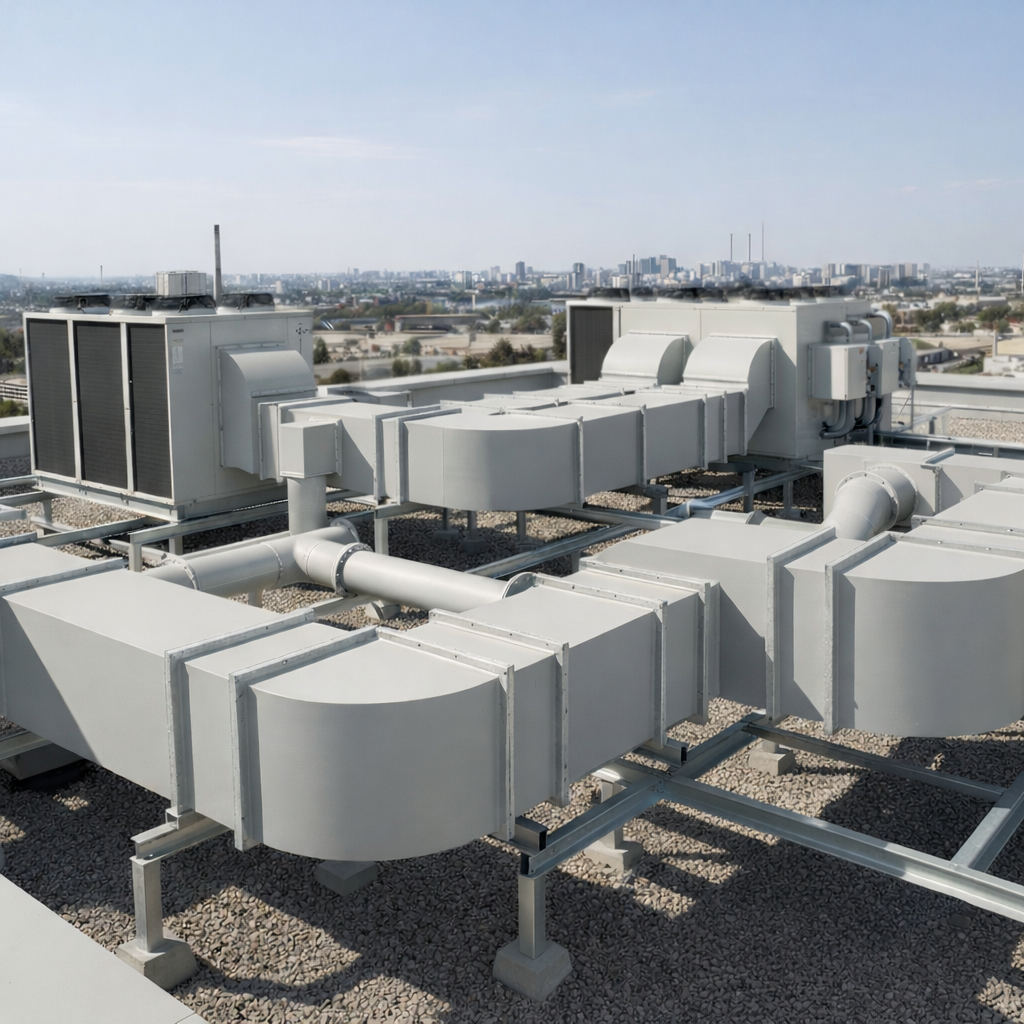
Fiberglass piping is suitable for desalination plants, chemical plants, drainage systems, industrial ventilation systems and gas treatment facilities.
Comparing the Piping Types
| Property | HDPE | PP | PVDF | FRP |
|---|---|---|---|---|
| Chemical resistance | High | High | Very high | Depends on resin type |
| Temperature resistance | Medium | Relatively high | High | Depends on design |
| Flexibility | High | Medium | Relatively low | Low |
| Relative cost | Low | Medium | High | Variable |
| Suitability for large diameters | High | Depends on availability | Relatively limited | High |
Which Parameters Should Be Checked Before Choosing Piping?
Before selecting the raw material and piping system, the actual operating conditions should be evaluated:
- The type of liquid or gas carried by the system.
- The composition and concentration of the chemicals.
- Maximum operating temperature.
- Operating pressure and vacuum conditions.
- Mechanical loads and installation conditions.
- Exposure to environmental conditions and sunlight.
- The project’s standards and safety requirements.
Correctly matching the raw material, wall thickness, joining method and system design is essential to ensure long-term reliability.
A.A.H. Plast – Engineered Piping Solutions
A.A.H. Plast Ltd. specializes in the design, manufacture, supply and installation of plastic and fiberglass piping systems for industry and infrastructure.
The company provides a wide range of solutions, including pipes, elbows, tees, reducers, manifolds and special pipe fittings manufactured to customer requirements.
With about four decades of industry experience and an ISO 9001 quality management system, we support our customers from the selection of the raw material through to manufacturing and on-site installation.
Need a piping system for an industrial process? Contact us for professional advice and a solution tailored to your project’s needs.